India's Democracy Between Elections
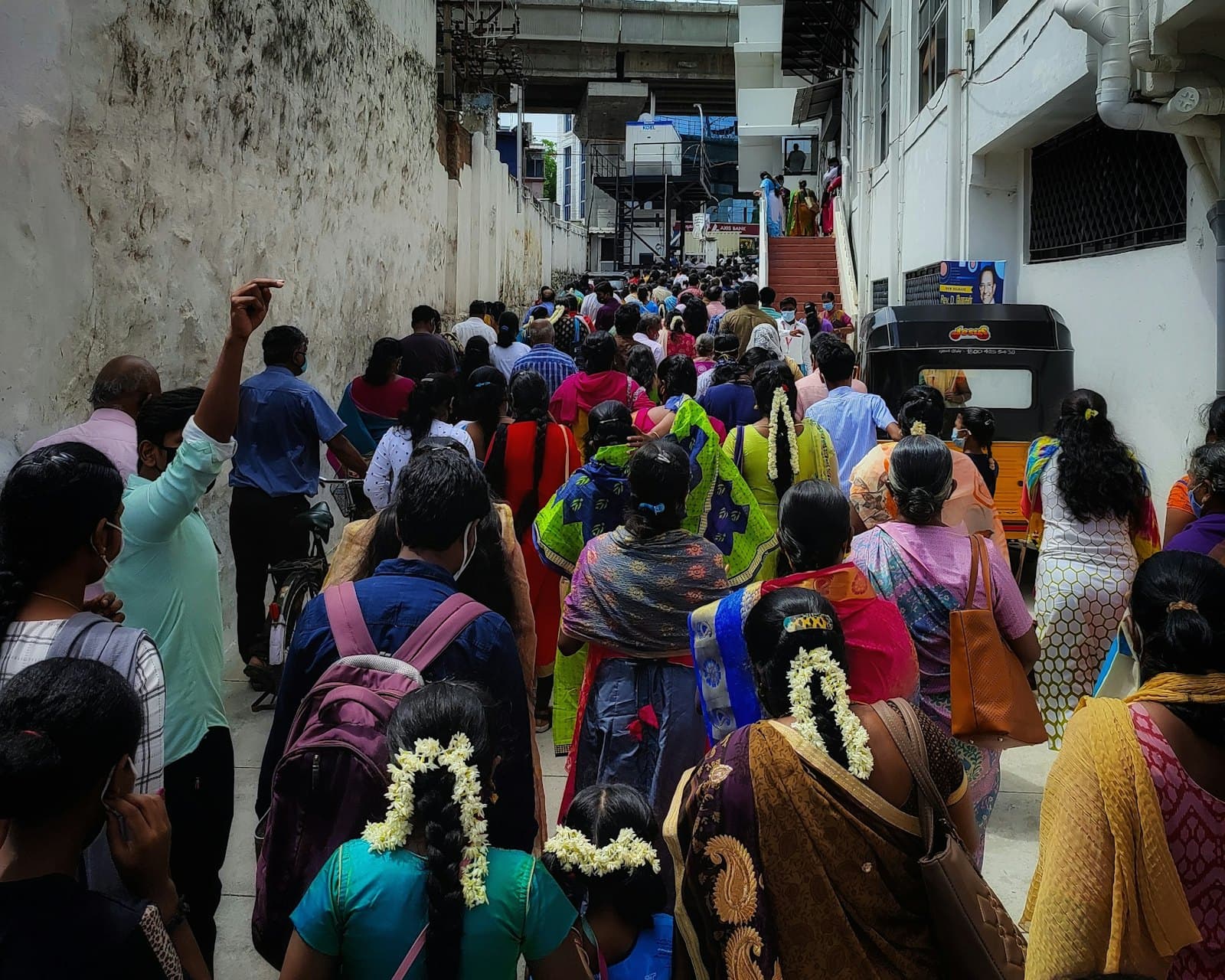
The election gets the photographs. The rest of the calendar belongs to courtrooms, audit reports, gram sabha meetings and RTI replies. A walk through the institutions that carry Indian democracy between votes, and what ordinary citizens can actually do with them.
The quiet months
Every general election in India produces the same album: queues at first light, inked fingers held up for the photographers. The scale earns the attention it gets. Lakhs of polling stations, an electorate larger than the population of most continents, governments changed peacefully because voters said so.
Then the cameras leave.
Budgets get spent in the quiet months. Contracts get awarded. Laws get implemented, or quietly shelved. And the distance between a rally promise and a repaired road outside your house is settled on days when nobody is voting. The rest of this piece is about who does the settling.
A door that opens directly
Start with the courts, because the Constitution did something unusual there. Article 32 lets any citizen move the Supreme Court directly when a fundamental right is violated. Dr. Ambedkar called the provision the very heart and soul of the Constitution, and public interest litigation later widened that door, allowing citizens to bring cases on behalf of people who could never reach a courtroom on their own.
Courts also review laws and government actions, and can strike down the ones that violate the Constitution. That power reaches surprisingly far, as the next section gets to.
Three offices most people never visit
The Election Commission of India, a constitutional body under Article 324, conducts elections to Parliament and the state legislatures and maintains the electoral rolls. It also enforces the Model Code of Conduct, which exists so that a ruling party cannot turn the government's resources into campaign material.
The Comptroller and Auditor General audits how public money is actually spent and places its reports before Parliament and the state legislatures, where committees of elected members go through them. A striking share of the spending scandals that later filled front pages surfaced first in a CAG report.
And the Information Commissions arrived with the Right to Information Act, 2005. Any citizen can ask any public authority for information, and the authority must normally reply within thirty days. If it stonewalls, there is a first appeal within the department and then a second to an Information Commission, which can order disclosure and penalise officers who wrongly withheld it.
Power, divided on purpose
Parliament and the state assemblies make the laws, and the executive carries them out. Deciding what the laws mean, when a dispute arrives, falls to the courts.
The arrangement cuts in every direction. Parliament can question ministers and vote a government out of office. Courts can strike down laws and executive actions that cross constitutional lines, and since the Supreme Court's Kesavananda Bharati judgment of 1973, not even a constitutional amendment may destroy the Constitution's basic structure. Around this formal arrangement sit the informal checks: a free press, opposition parties, civil society, citizens with smartphones and RTI applications. In practice, those outer layers tend to notice trouble first.
The tier at the end of the street
For most households the state they actually deal with is local: the water connection, the streetlight, the garbage van, the birth certificate. That layer acquired constitutional status in 1992, when the 73rd and 74th Amendments made panchayats and municipalities a formal third tier of government.
The 73rd covers rural India, panchayats from the village upward, with the gram sabha (every registered voter in the village, meeting together) at the base. The 74th covers urban India, from nagar panchayats in smaller towns up to municipal corporations in the big cities, with municipal councils in between. Both require regular elections conducted by State Election Commissions, and both reserve at least one-third of seats for women; many states have since raised that share to half.
Add it up and the local tier holds lakhs of elected representatives, more than all MPs and MLAs combined — a fact that tends to surprise people the first time they hear it.
What use actually looks like
Institutions respond to use, and use has a few plain forms. Voting in municipal and panchayat elections is the first, and the most neglected. Turnout in city elections routinely falls far below what the same voters manage in a general election. So the level of government closest to daily life gets chosen by the fewest people. Checking your name on the electoral roll, while you are at it, takes a few minutes.
Putting things on record is the second. A grievance filed on CPGRAMS for central departments, or on your state's portal for state subjects, produces a registration number and a timeline that an unanswered phone call never will.
An unfiled complaint is just a mood.
The rest is asking and checking. An RTI application, filed on the RTI Online portal for central public authorities or through the state equivalent, can establish how much was sanctioned for a road and when the tender went out, or why a file has stopped moving. A gram sabha or ward meeting lets you put the same questions in person. (For what it's worth, anyone who has sat through a full gram sabha agenda learns that the arguments over beneficiary lists run longest and probably matter most.) And before forwarding a confident claim about any of this, verifying it costs about two minutes.
Disclosure: this is the corner MyAlly works in. The app figures out which authority actually owns a given problem and files on the official channels, CPGRAMS or the relevant state portal, so a complaint reaches the right desk the first time instead of bouncing between departments.
The part that doesn't work
It would be dishonest to leave out the frictions, because everyone who uses these channels meets them. Court backlogs run into crores of cases, which means a right that exists on paper can take years to enforce in person. Several state Information Commissions operate with vacant posts and long appeal queues. Grievance portals sometimes mark a complaint closed with a reply that resolves nothing. Panchayats and municipalities hold constitutional rank but often lack the money and staff to match, a gap administrators themselves call the problem of funds, functions and functionaries. In my experience that last one is the hardest to watch, because it sits closest to home. None of it is hidden, and none of it is new.
But each of these failures has a next step attached. A delayed RTI reply can be appealed. A grievance closed without resolution can be escalated, or simply refiled. And a gram sabha with twenty extra attendees behaves differently from the one held the month before. These channels improve when used and decay when ignored, slowly and unevenly in both directions.
An open question
All of it rests on an assumption the Constitution could not write down: that enough people will keep using these channels to keep them in working order.
Whether that assumption holds is, frankly, unclear. Turnout in local elections stays low. Appeal queues keep growing, and the ward meeting still falls on a working Tuesday. So the honest question, the one this piece can raise but not settle: how many people, showing up how often, does it take to keep an unglamorous public channel working?
No comments yet — start the conversation.