Why I Still Pay for a Newspaper
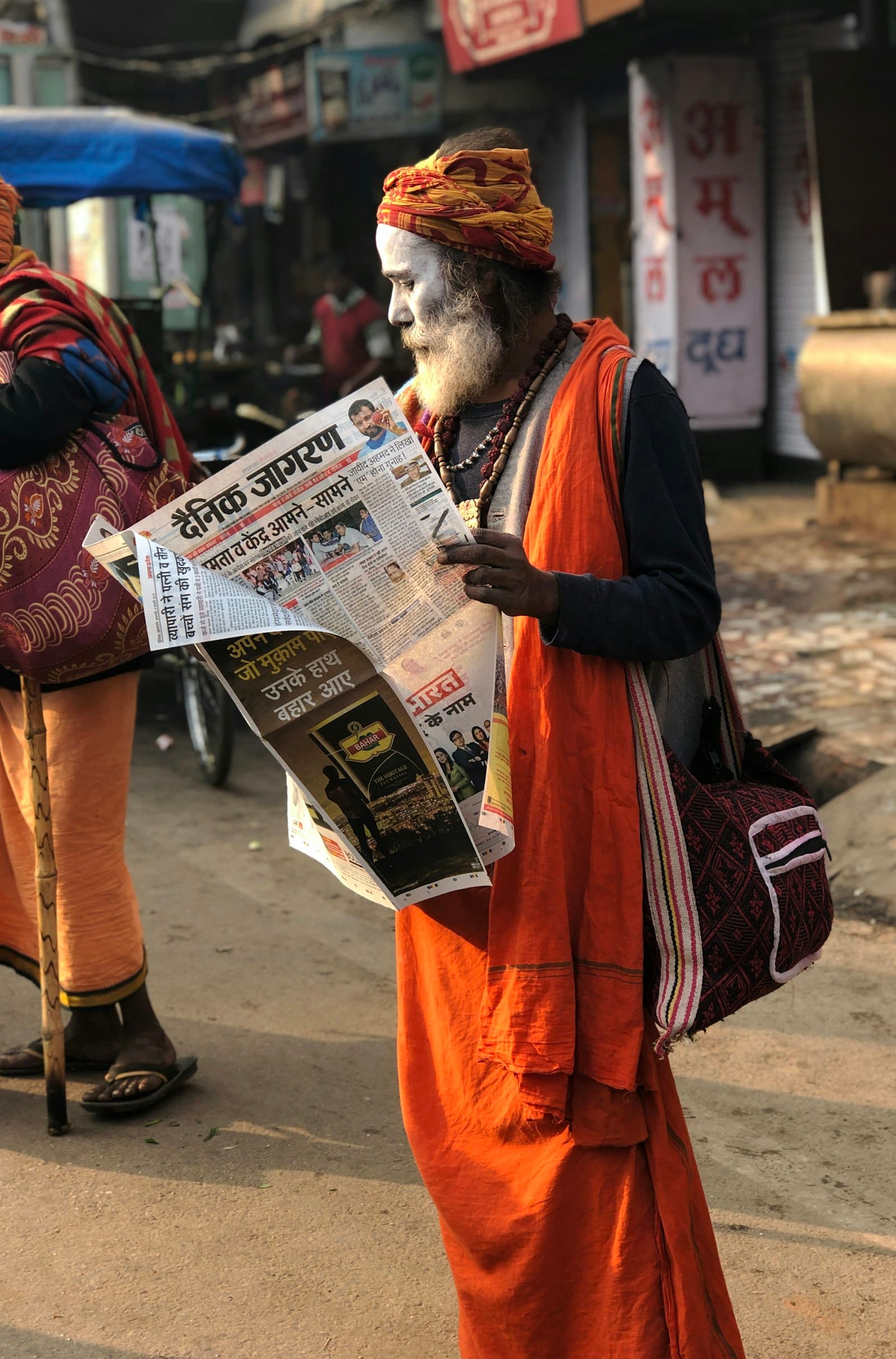
Civics textbooks rank the media as the fourth pillar of democracy, after the legislature, the executive and the judiciary. I have doubts about that phrase, and a personal stake in the argument, so let me declare both up front.
First, a confession
I pay for one newspaper. Have done for years. Whenever this comes up at dinner, somebody delivers the standard line, sab bika hua hai, they are all sold out, why give them your money, and I catch myself getting defensive about a subscription that costs less per month than a single pizza. (My grandfather took two papers and read them against each other, mostly, I suspect, for the pleasure of disagreeing with both.)
So, bias declared.
What follows is a case for the press, and also a complaint about the most common way of praising it.
Somebody has to sit through the budget session
Most of us will never watch a Parliament session end to end. We will not read a municipal budget or spend a working morning in a courtroom, because we have jobs and lives that are full already. Reporters do these dull things professionally, so that the rest of us can learn over tea what the powerful did yesterday. When a bridge collapses or a question paper leaks, it is almost always a journalist who first puts the facts on record; the ration that went missing from a village usually surfaces the same way. Nobody else in the system holds that job. The other organs will not investigate themselves unprompted, and courts can only rule on what is brought before them. And elections come once in five years while accountability is a daily affair, so your judgment of a government or a corporation between votes is only as good as the information that actually reaches you.
Where the pillar talk goes wrong
Now the complaint. Calling the press a pillar places it in a row with institutions that hold real, formal power. Parliament can pass a law against you; a court can jail you for contempt. The press can do neither. Its entire arsenal is your attention, which is one reason the phrase flatters it.
The deeper trouble is constitutional. Search the Constitution of India for the words "freedom of the press" and you will search in vain. What exists is Article 19(1)(a), which guarantees every citizen the freedom of speech and expression, plus a line of Supreme Court rulings from the Republic's earliest years holding that this freedom covers the press too, including the freedom to gather news and to print and circulate it. A journalist, in other words, holds no right that you lack. They exercise your right, full-time and in public. The pillar talk buries this, and lets readers treat press freedom as a professional privilege that is the profession's own problem to defend. When an outlet gets muzzled, the right being narrowed is yours.
The freedom was never absolute, either. Article 19(2) permits reasonable restrictions on grounds such as security of the State, public order, decency, defamation and contempt of court, and courts get to test whether a given restriction really is reasonable. We know what it looks like when that check slips. During the Emergency of 1975-77, newspapers were censored, and some ran blank editorial columns in protest, white space where the day's argument should have been.
How to weaken a press without banning it
No censorship law is required; quieter pressures do most of the damage.
Ownership does the first part. When a handful of large business houses own most newspapers and channels, the range of voices narrows on its own, and an outlet that survives on advertising, government advertising included, thinks twice before annoying the advertiser. The story that dies quietly in an editorial meeting never shows up in any statistic.
Misinformation does the second. A false claim can reach a lakh phones before a reporter finishes the second call needed to verify it, and a steady flood of fakes teaches people to distrust everything, honest reporting included. That dinner-table cynicism I keep meeting is precisely what the flood is engineered to produce, since a public that believes nothing can hold no one to account.
And then there is trial by media. Courts decide guilt; some coverage decides it first, pronouncing a person guilty mid-investigation. That can wreck the life of someone who may be innocent, and it prejudices the fair trial that even the guilty are owed. Over time it also costs the media its own credibility, though the shouting channels seem to worry about that least of all.
Three baskets
My sorting method for the daily intake is crude but serviceable. Reportage tells you what happened: who, what, when, where, with sources named on record and documents you could in principle check. Its job is accuracy, nothing more. Opinion, meaning editorials and columns (this one included) along with panel debates, tells you what somebody thinks the facts mean, and it is perfectly legitimate so long as it is labelled and read as argument rather than record. The third basket is noise. Shouting matches, mostly, and outrage loops in which neither verified fact nor honest argument survives. Frankly, most prime-time debate goes straight into basket three.
A few tells speed up the sorting. Adjectives in a headline usually signal opinion. "Sources say" with no document behind it is weaker than an on-record statement. A report that carries the other side's response, even a curt "did not respond to queries", has at least tried to be fair. Read past the headline before forming a view; the headline was written to get the click, not to be complete.
The bill, and what comes after the story
Back to my subscription. Good journalism is expensive. Reporters travel, and documents take months to pry loose; the legal bills arrive regardless of whether the story wins awards. If your news reaches you free, somebody else is paying for it, and it is worth asking what that somebody expects in return. Paying for even one outlet whose reporting you trust is the most direct thing an ordinary reader can do for independent journalism, which is roughly what I tell the dinner table. Rewarding newsrooms that publish corrections comes a close second, because owning up to error is the mark of a newsroom that cares about being right, and mocking a correction teaches everyone to stop issuing them.
The reader's other job begins where a story ends. A report can tell you that your district hospital has no working ambulance; it cannot file the follow-up questions or demand the fix. That part is yours. The Right to Information Act, 2005 lets any citizen put to a public authority the very questions a reporter would ask, and the official grievance portals put a demand for action on record. This is where MyAlly earns its keep. When a story about your area leaves you wondering what happens next, the app helps you turn that into an RTI on RTI Online or a formal grievance on CPGRAMS, addressed to the correct authority and tracked until a reply arrives.
Habits, for what they're worth
One last thing, since the family WhatsApp group is where much of India now meets its news first. Some habits I try to keep, with mixed success:
- If a forward makes me furious or triumphant within seconds, I wait before sharing it. Strong emotion is how most fakes travel.
- I ask who reported it. A claim with no byline and no link to any named outlet is a rumour, however polished it looks.
- For anything explosive, I wait for a second, independent source. If only one place on earth is reporting it, that tells you something.
- I check the date. Old photos and videos are routinely recirculated as breaking news, and a reverse image search takes under a minute.
- Screenshots of headlines get no benefit of the doubt from me; they are easy to fake, so I go and find the original.
- I follow a couple of the fact-checking desks that Indian newsrooms now run. By the time a viral claim reaches me, someone has usually tested it already.
And when I do get one wrong, I send the correction to the same group I forwarded it to. Still working on managing that every time.
No comments yet — start the conversation.